
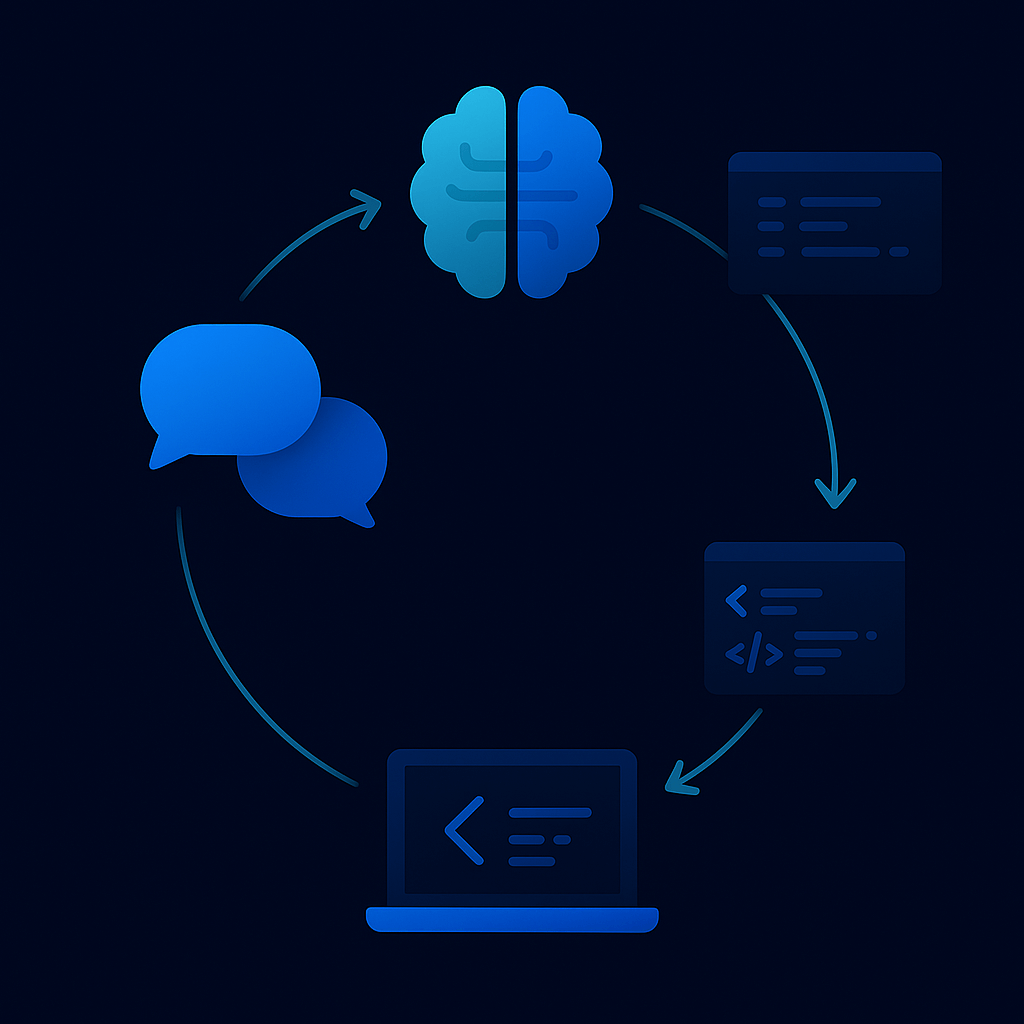
Protect your development environment from prompt injection, data leaks, and unauthorized tool usage- while maintaining developer velocity across IDE, CLI, and MCP agents.
Developers paste API keys, tokens, and credentials into AI tools for debugging, creating immediate exposure risks across chat logs and code repositories.
Teams deploy unsanctioned plugins, extensions, and SaaS assistants outside IT oversight, fragmenting governance and making incident response nearly impossible.
Model Context Protocol integrations allow AI agents direct access to organizational files, databases, and APIs without proper authentication or audit controls.
LLMs produce syntactically correct code with silent vulnerabilities-missing input validation, insecure defaults, and outdated dependencies that slip past manual review.
AI workflows span chat interfaces, IDEs, MCP servers, and multiple SaaS platforms, creating visibility gaps that complicate forensics and compliance reporting.
Prompt injection, credential extraction, and LLM manipulation are emerging threats—one compromised prompt can lead to data exfiltration or code execution.
Complete security for AI coding agents without disrupting developer velocity or compromising innovation
Complete observability into AI-assisted development workflows
Inline guardrails enforced by the Agent-Native Policy Enforcement Point at the agent edge (IDE/CLI/MCP).
Real-time threat detection and blocking
See how organizations secure AI infrastructure access with identity-integrated controls
without compromising developer productivity or AI agent workflows.
Native integrations with popular AI coding platforms to maintain development speed while enforcing security policies automatically.
Inline DLP prevents credential exposure and sensitive data leaks in prompts or generated code without manual security checks.
Focus on features while ensuring every AI interaction meets enterprise security through automated policy enforcement.
Push and manage Lumeus across developer machines using existing mobile device management infrastructure.
Quickly revert problematic AI tool configurations across all development environments from a single console.
Real-time organizational mapping of AI tool adoption, performance metrics, and resource utilization for capacity planning.
Monitoring of AI development environments with real-time threat detection for vulnerable code before production deployment.
Zero-trust authentication for AI agents accessing Kubernetes, SSH, and Jupyter notebooks with ephemeral access controls.
Automated scanning and blocking of insecure patterns, outdated dependencies, and prompt injection attempts across all AI interactions.
Input your search keywords and press Enter.